
Homilies: Against Gluttony & Drunkenness
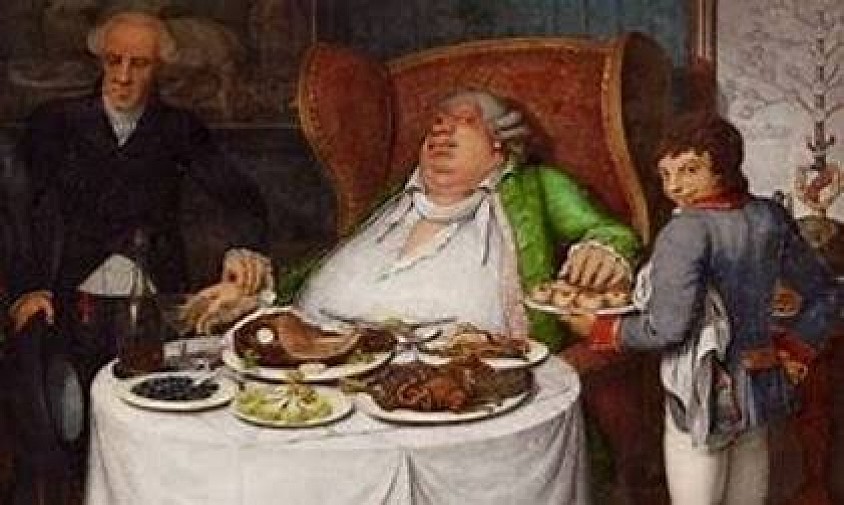
Scriptural Reference:
"Be not among drunkards or among gluttonous eaters of meat, for the drunkard and the glutton will come to poverty, and slumber will clothe them with rags"
Proverbs 23:20-21
"A discerning son heeds instruction, but a companion of gluttons disgraces his father"
Proverbs 28:7
"Their destiny is destruction, their god is their stomach, and their glory is in their shame. Their mind is set on earthly things"
Philippians 3:19
"Do you not know that you are God's temple and that God's Spirit dwells in you? If anyone destroys God's temple, God will destroy him. For God's temple is holy, and you are that temple"
1 Corinthians 3:16-17
"So, whether you eat or drink, or whatever you do, do all to the glory of God"
1 Corinthians 10:31
"But put on the Lord Jesus Christ, and make no provision for the flesh, to gratify its desires"
Romans 13:14
"But mark this: There will be terrible times in the last days. People will be lovers of themselves, lovers of money, boastful, proud, abusive, disobedient to their parents, ungrateful, unholy, without love, unforgiving, slanderous, without self-control, brutal, not lovers of the good, treacherous, rash, conceited, lovers of pleasure rather than lovers of God— having a form of godliness but denying its power. Have nothing to do with such people. They are the kind who worm their way into homes and gain control over gullible women, who are loaded down with sins and are swayed by all kinds of evil desires, always learning but never able to come to a knowledge of the truth. Just as Jannes and Jambres opposed Moses, so also these teachers oppose the truth. They are men of depraved minds, who, as far as the faith is concerned, are rejected. But they will not get very far because, as in the case of those men, their folly will be clear to everyone"
2 Timothy 3:1-9
Reflection:
Much can be said about enjoying a satisfying meal. Or drinking a well made wine or properly mixed cocktail. Yet the old adage of moderation can quickly come to mind. I feel confident to suggest that when many of us were young we youthfully indulged in drink and food. It seems to be part of growing up. Something that peer pressure creates. Though I understand not all young people give into such pressure. I remember my youth as a difficult time. I never seemed to fit in with any particular group. So in an effort to fit in somewhere I took up drinking heavily. It got to the point where I had the nickname 'Fish' for my ability to consumer large amounts of alcohol without becoming disoriented. As for indulging in anything that could be reasonably called gluttony? I never had a great deal of money so I never found this to become a challenge. The problem with these two, drunkenness and gluttony, is when it becomes a controlling factor. Not to say that it's okay to get drunk. But to express that drinking just to get drunk can take over someone's life. As well as eating to excess can be detrimental to someone's healthy. Both of which the Bible warns against. Which leads us into the Homily regarding the two.
From a biblical point of view we are given guidance on how dangerous such behaviour is. We can delve a little deeper into these two with the focus on what damage they do and what we can do to avoid them.
Gluttony: Having a good balanced diet is important for our health. There is a pyramid of foods that many doctors will point to as an expression and explanation to what such a balanced diet would include. As well as how much of each food category to enjoy.
The Bible speaks of gluttony as not just concerning food but also any appetite that can become an idol and a source of comfort other the God. Which reminds me of an old saying.
"The way to many an honest heart lies through the belly"
Richard Ford
The link between the heart and the stomach can be easily understood. When someone feels comfortably filled with good food they can feel emotionally content within their heart. Yet this can become a detraction from the true comfort they can find in a healthy relationship with God. This has been perceived as, in biblical terms, an overindulgence. Which isn't strictly confined to the dinner table. It can extend to an insatiable craving for luxury, ease, or sensory distractions that dull the soul's alertness. Leaving it vulnerable to compromise Godly wisdom for cardinal pleasures.
In 1 Corinthians 10:31 believers are reminded and instructed on the correct relationship we should have with food in general. "So whether you eat or drink or whatever you do, do it all for the glory of God". Our daily bread is a manifested blessing from our God and should not be taken lightly or used to replace the comfort we may receive from Him.
Drunkenness: This is a minefield of hidden dangers and traps. All too easy to fall victim to the subtle allure and relative relaxing ease that alcohol can cause. I remember the movie "The Day's of Wine and Roses". Starring Jack Lemon and Lee Remick who start the film as two young upwardly moving individuals deeply in love. Jack Lemons character introduces Lee Remick's character to her first drink of alcohol. A chocolate daiquiri She has an instant liking to the drink as she is a natural chocoholic Sadly as the story unravels near the end the two part ways. Jack Lemons character becomes aware of his addiction to alcohol and chooses to stop drinking. While Lee Remick's character, who he had enticed into drinking with him, can't break the addiction and is left behind. A scar that would imaginably stay with Jack's character throughout his life.
The reference her is to highlight the ease and depth of the addiction. The damage it does to individuals. Even when they are able to break away. And the carnage they leave behind them.
Back to the Bible and how sternly this problem is deemed.
"Do not get drunk with wine, for that is debauchery."
Ephesians 5:18
The New Testament uses the Greek term "Asotia" which is translated to read "debauchery". This word suggests a way of life that is characterised by "wastefulness," "dissipation," or a total absence of any self-control. It refers to a person who forsakes moral boundaries and behaves without any concern for responsibility or virtue. It sums up into the attitude of someone who prefers to live in a vague foggy mindset. Denying any responsibility for actions or decisions. Legally people have tried to avoid the consequences of their action by claiming diminished responsibility due to being intoxicated. God provided drink for the comfort and celebratory use of His creation. Not to be abused.
We are told that in moderation the drinking of wine will gladden a joyful heart.
And wine that makes glad the heart of man, Oil to make his face shine,
And bread which strengthens man’s heart.
Psalm 104:15
Paul advised Timothy to drink a little wine to help relieve his stomach complaint.
No longer drink only water, but use a little wine for your stomach’s sake and your frequent infirmities.
1 Timothy 5:23
In both these references we can read how beneficial a little wine, or alcohol, can be for us. While keeping mindful of framing in words as "a little wine". It is similar to medication. The correct application of any medication is beneficial to a healthy body and mind. Yet the abuse of such will lead to a detrimental result. The warning of drunkenness in the Bible can also be applied to the abuse of anything that damages the body and soul if taken in an abusive way. We are warned and need to be mindful of this warning as such abuse will destroy us physical and spiritually. And can lead to a damaged relationship with our Lord and Saviour.
There is a very old Greek quote which says;
"pan metron ariston"
"moderation is best"
Is perhaps the best ways to frame and conceive the challenges of both gluttony and drunkenness. Though I would add that the very term "moderation" should be viewed as "subjective: and never "objective". As each person ability to moderate their use of either alcohol or food (indulgence) is something they as an individual needs to come to terms with. And trying to moderate based on others would be difficult and at most times impossible to apply.
In closing I would advise that we each need to pray and seek the guidance of the Holy Spirit.
Prayer:
Lord I know that my flesh is weak.
It would lead me astray from you.
Leading me to do those awful things,
That your Holy Spirit teaches me not to.
I pray you will nurture and guide me,
As I continue in prayer and perseverance,
To do that which is acceptable in you sight,
Avoiding those things which you despise.
I pray this in Your Sons precious name,
Jesus the Christ my Saviour.
Amen